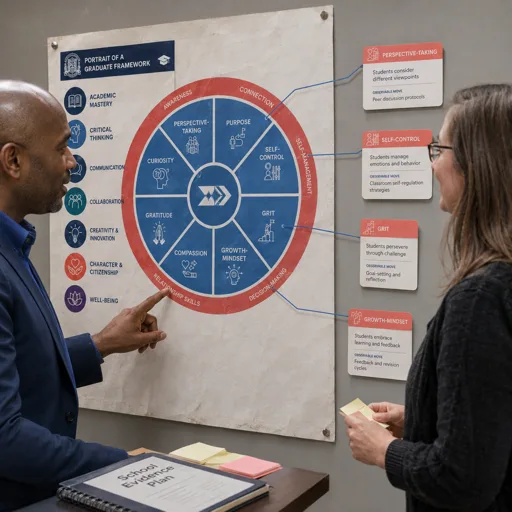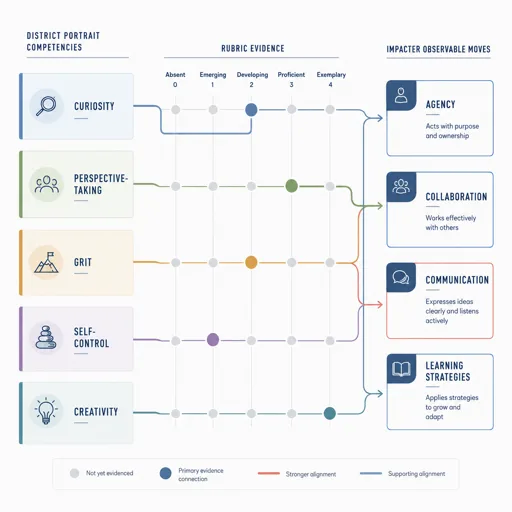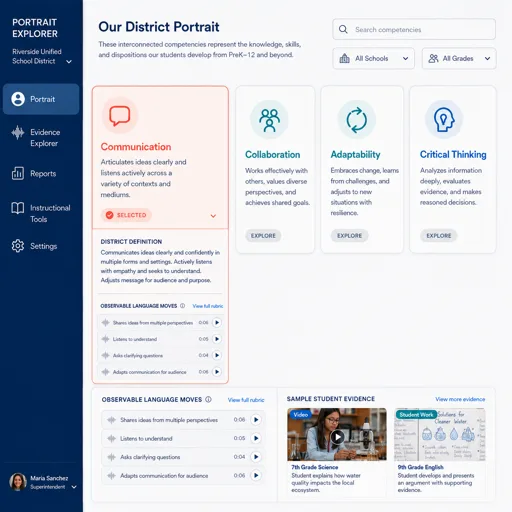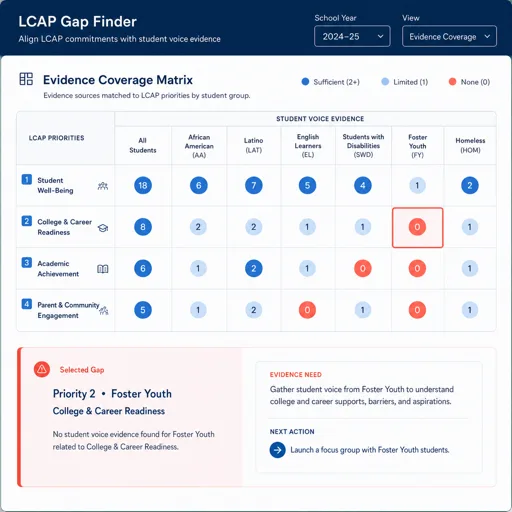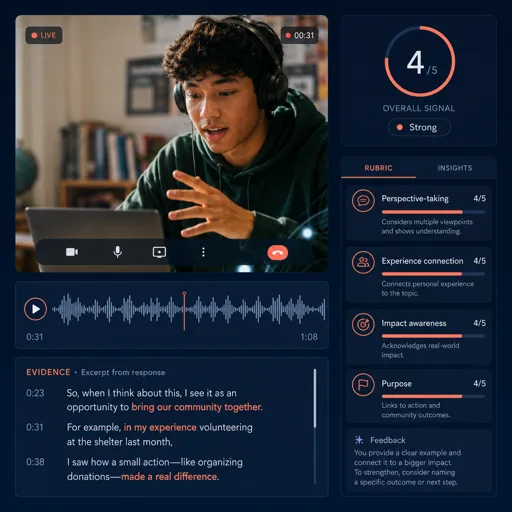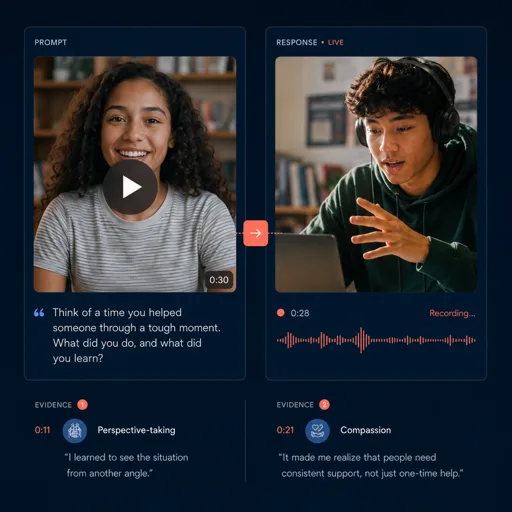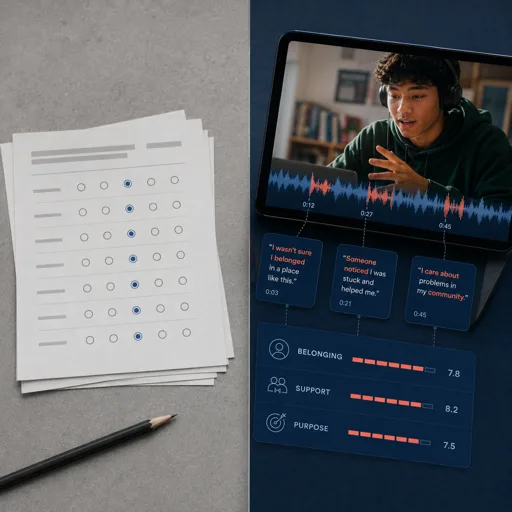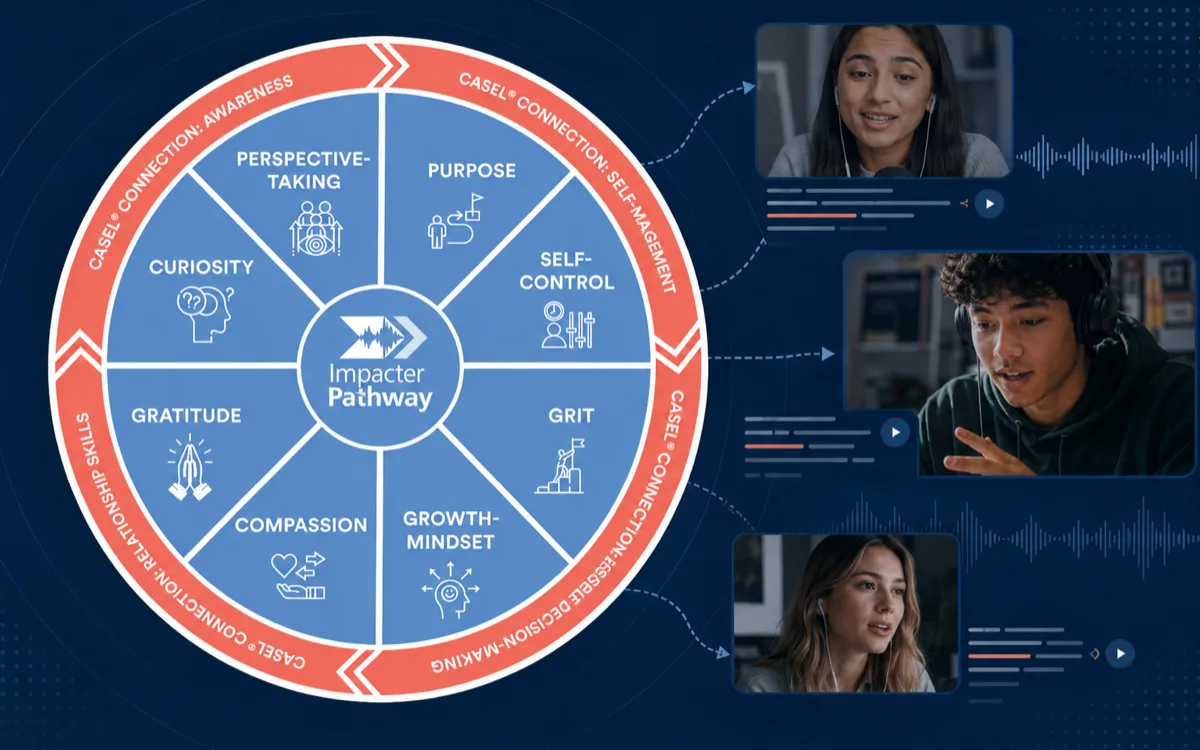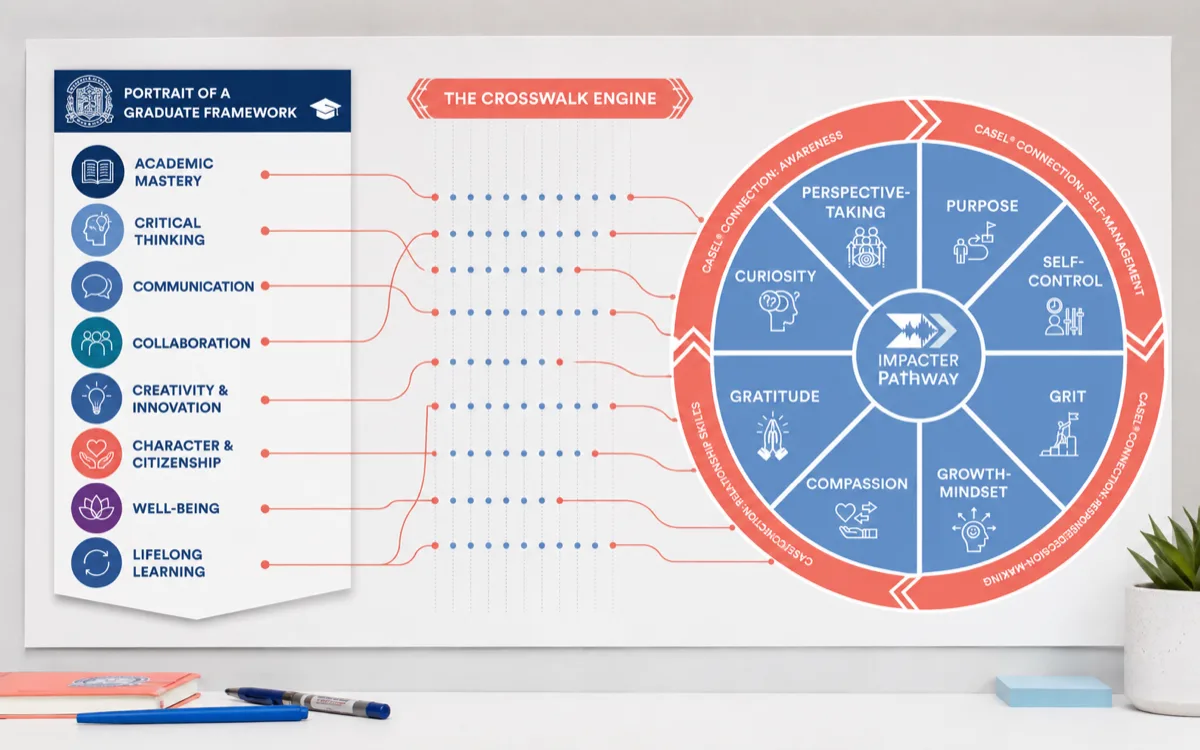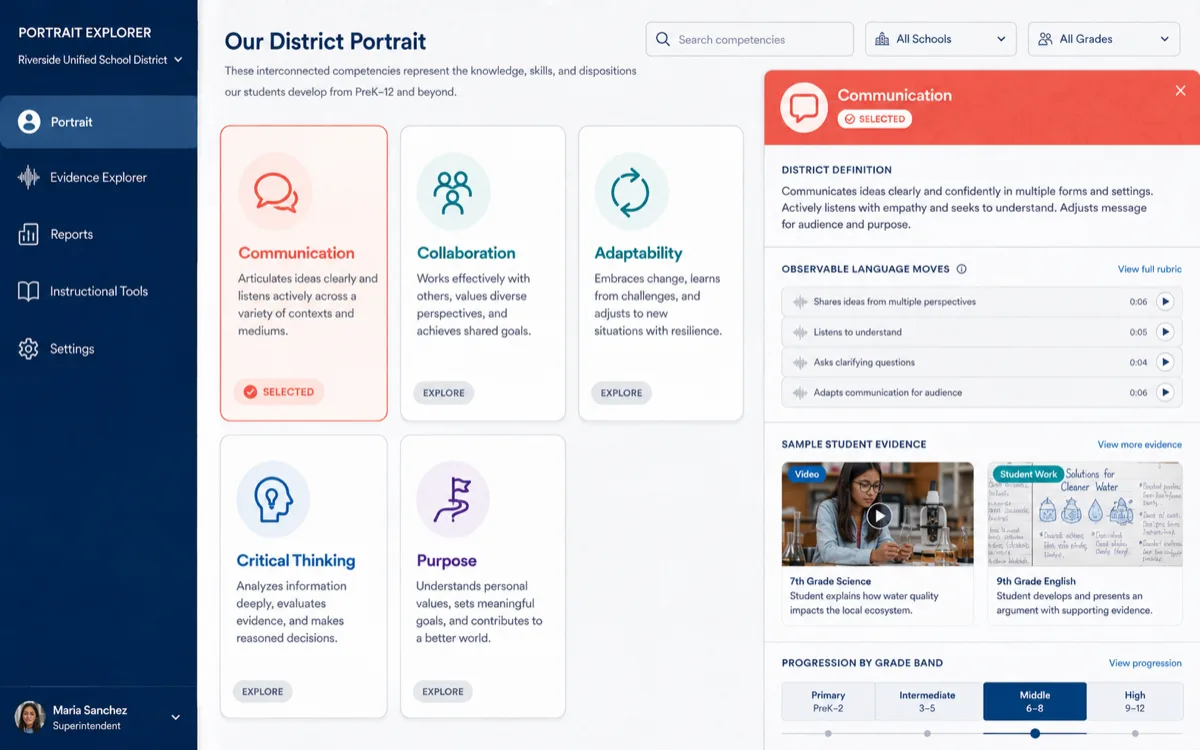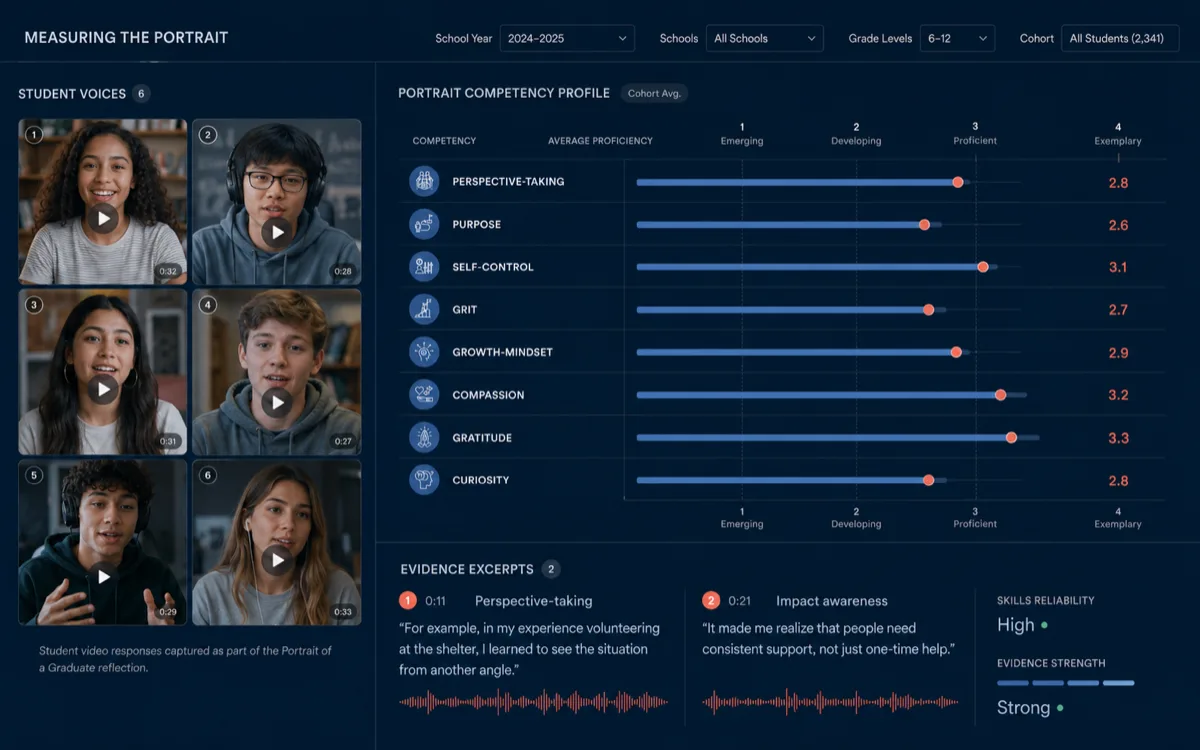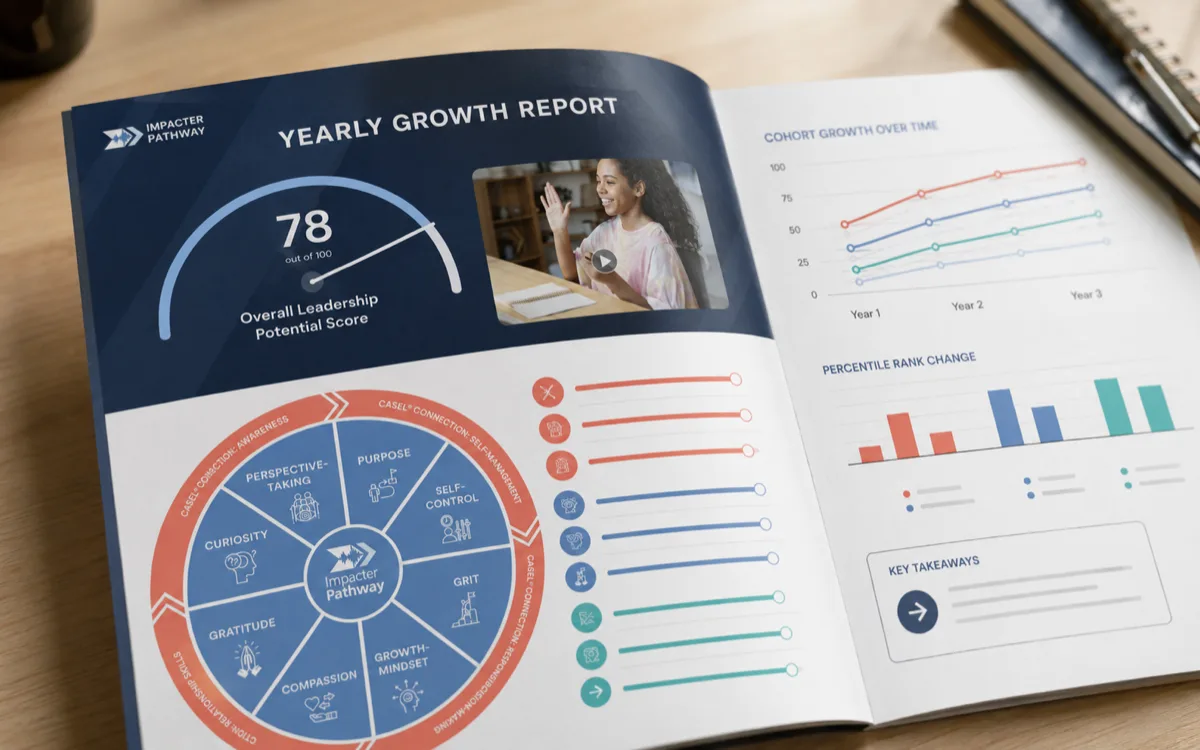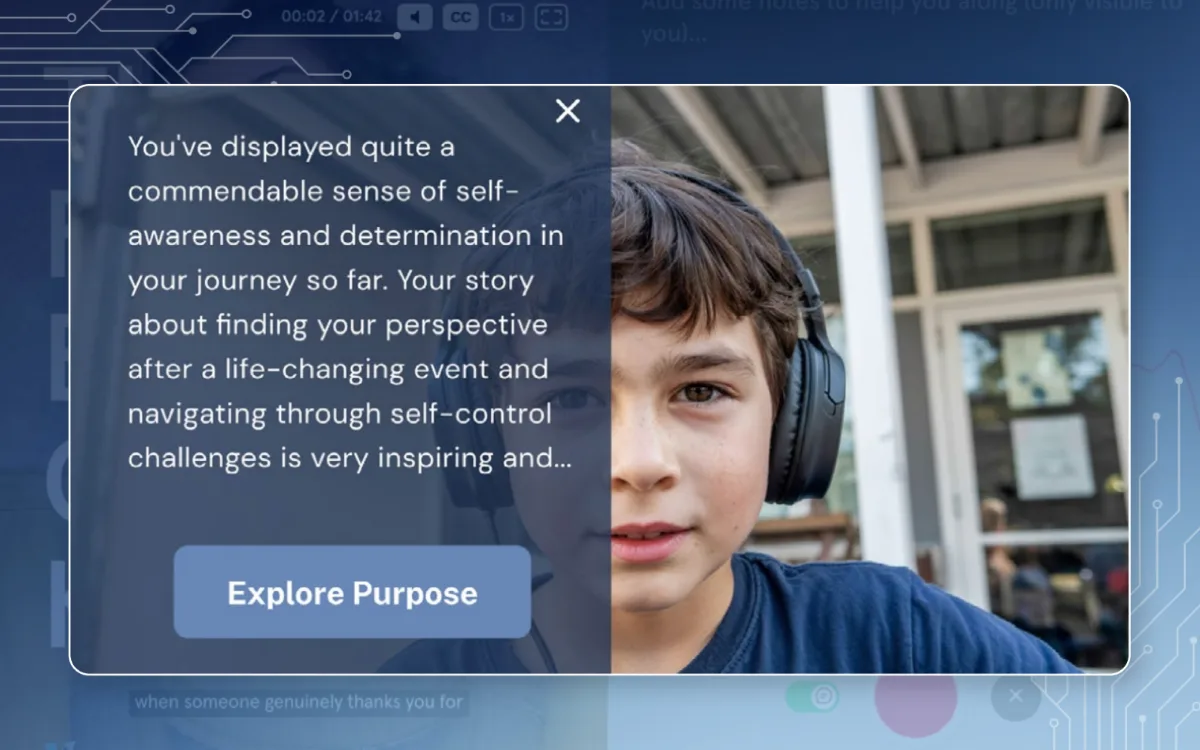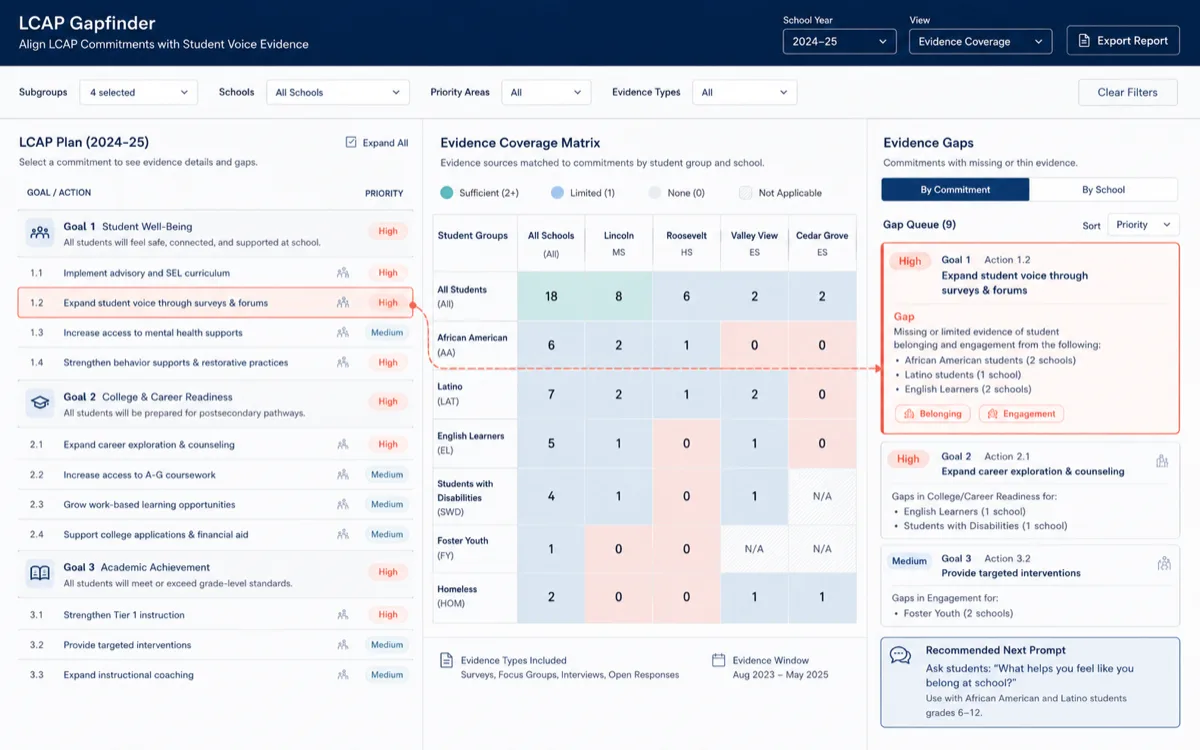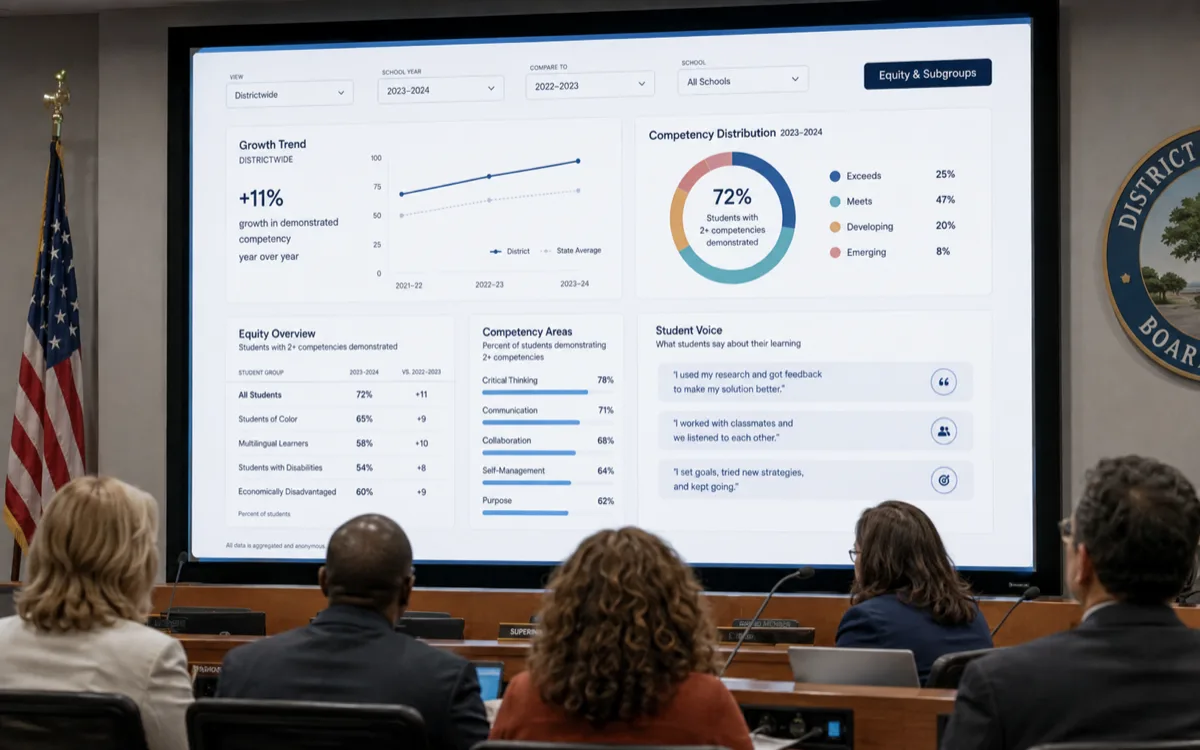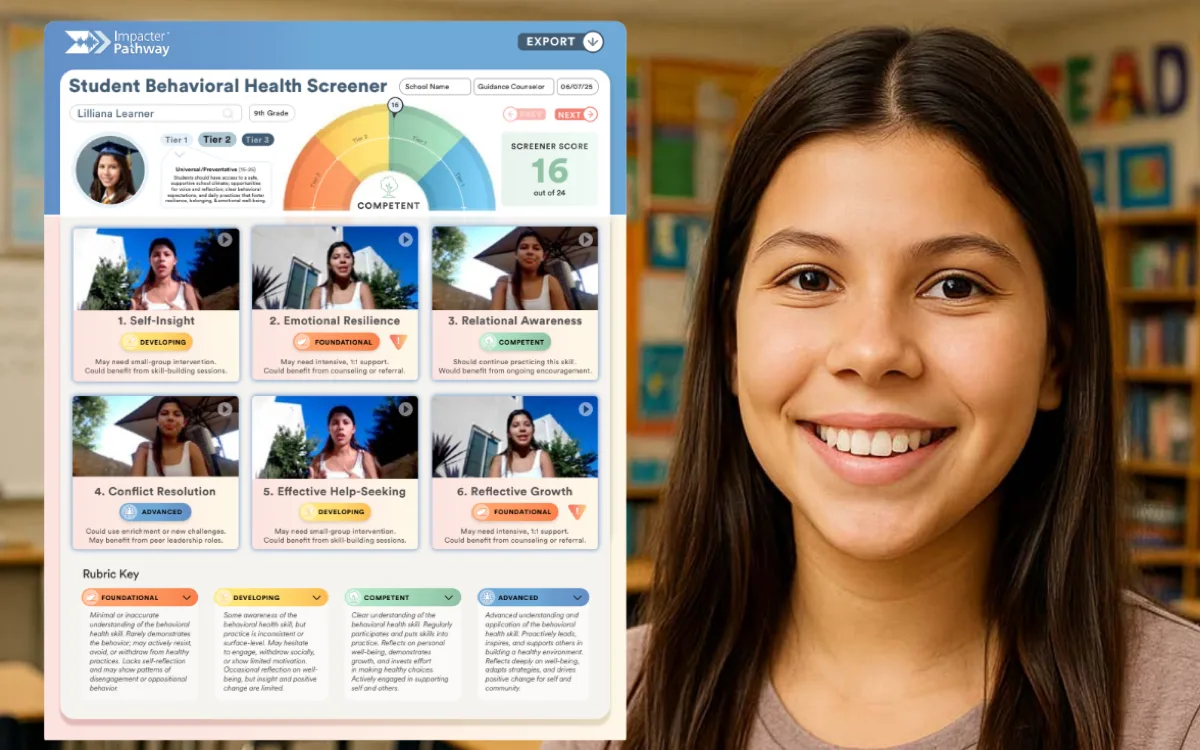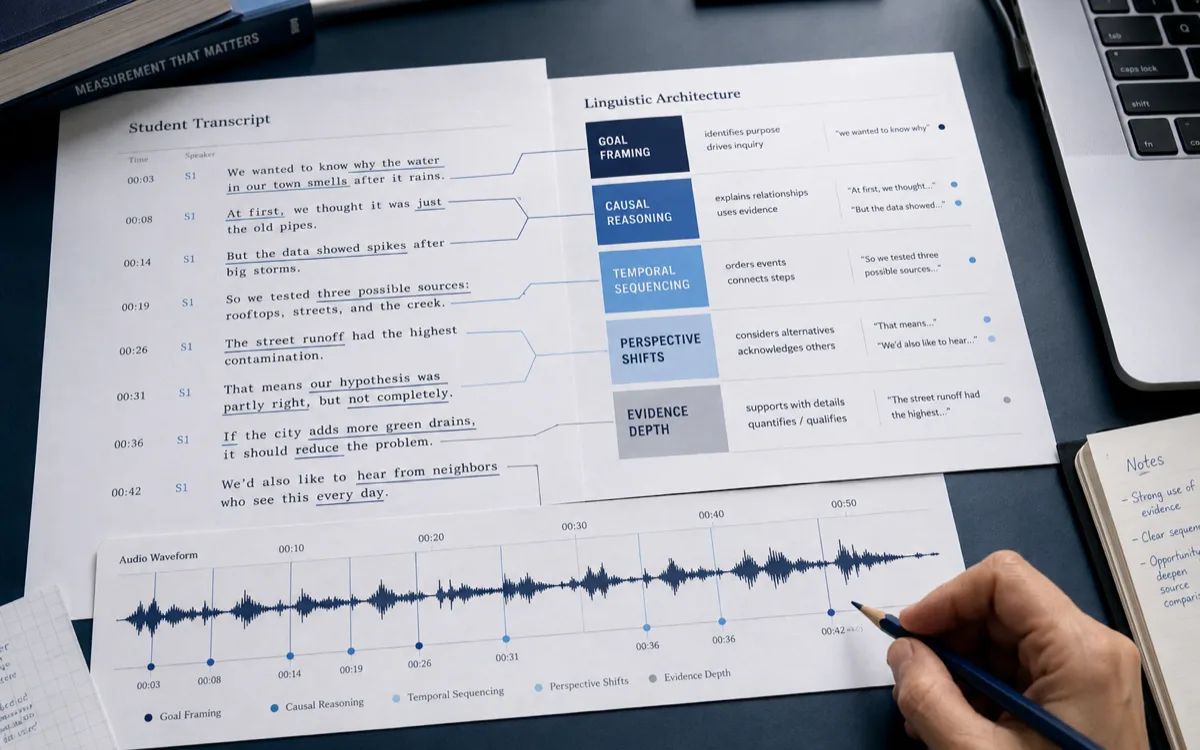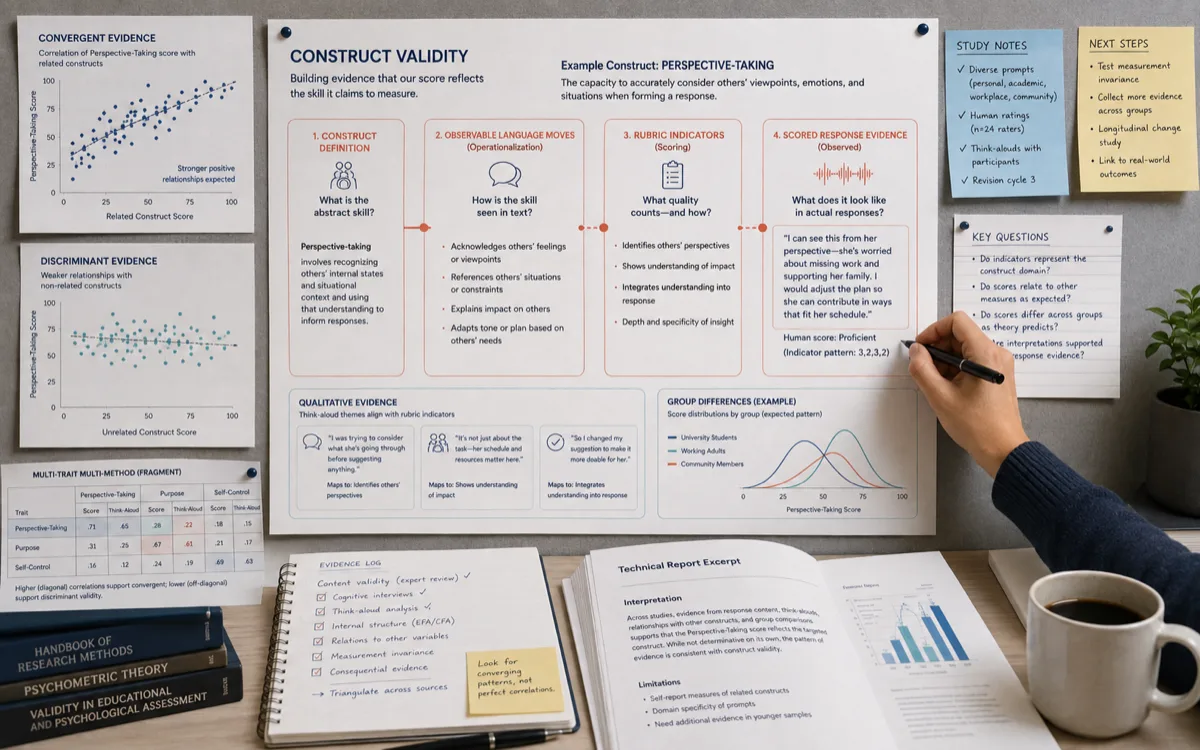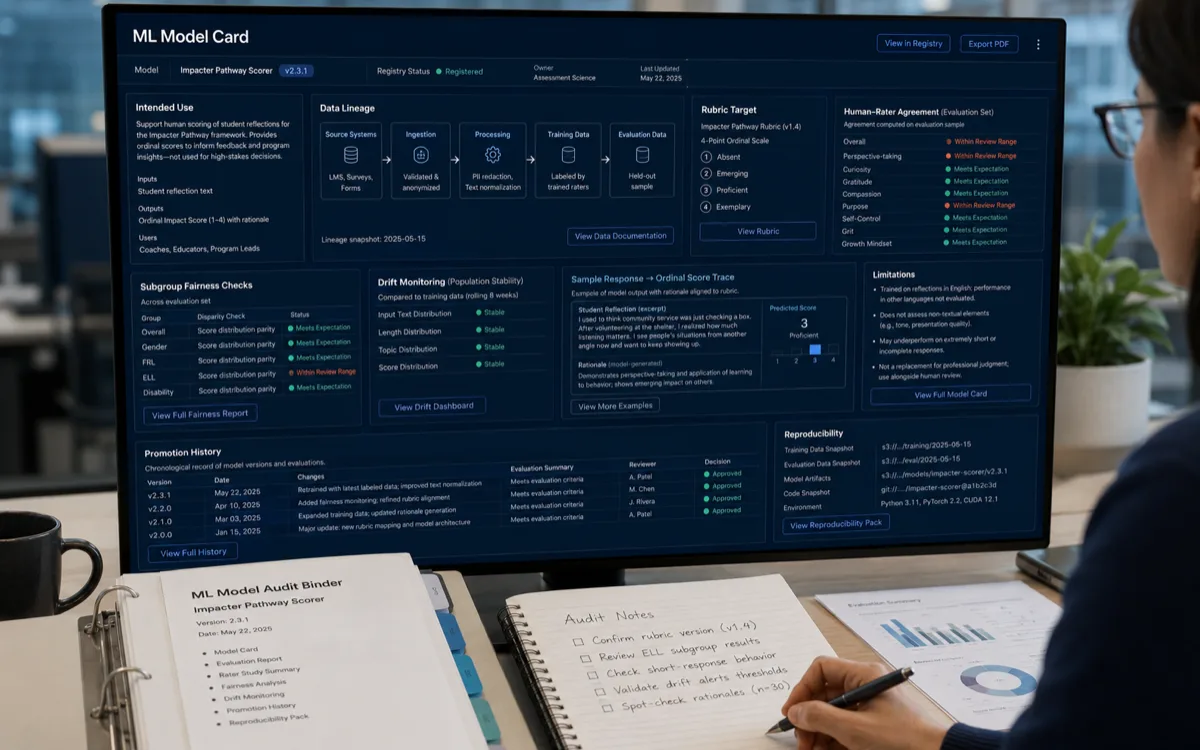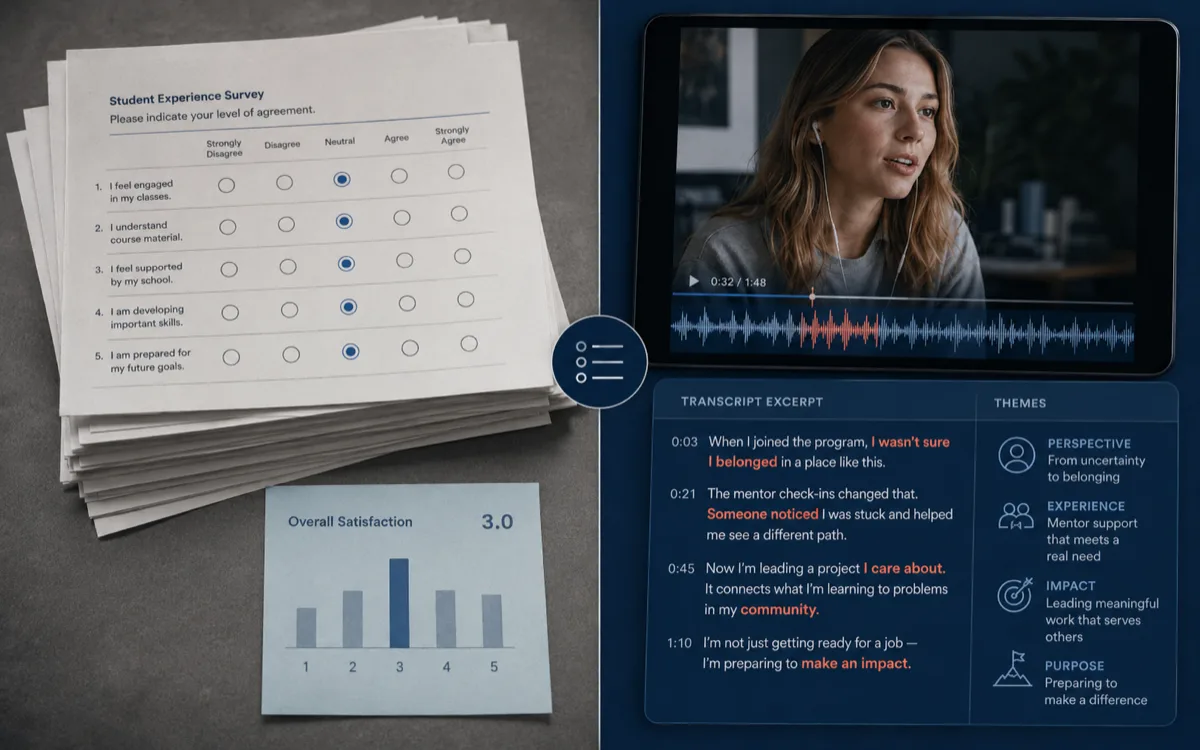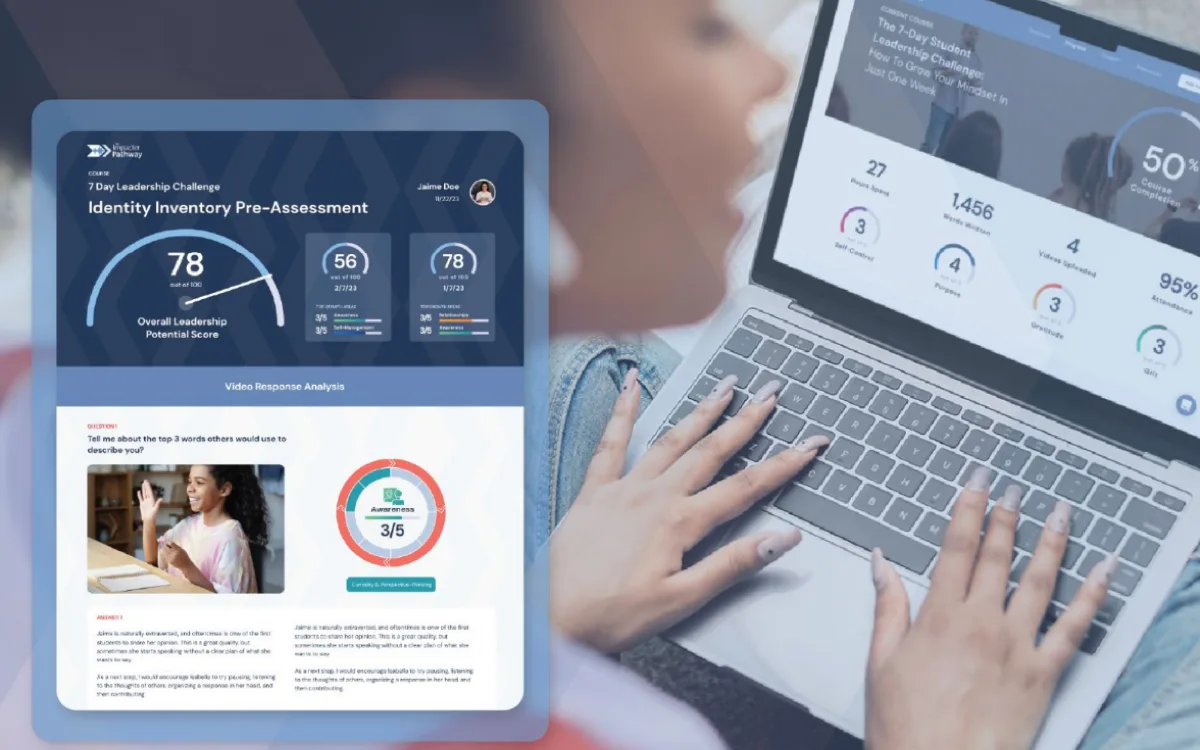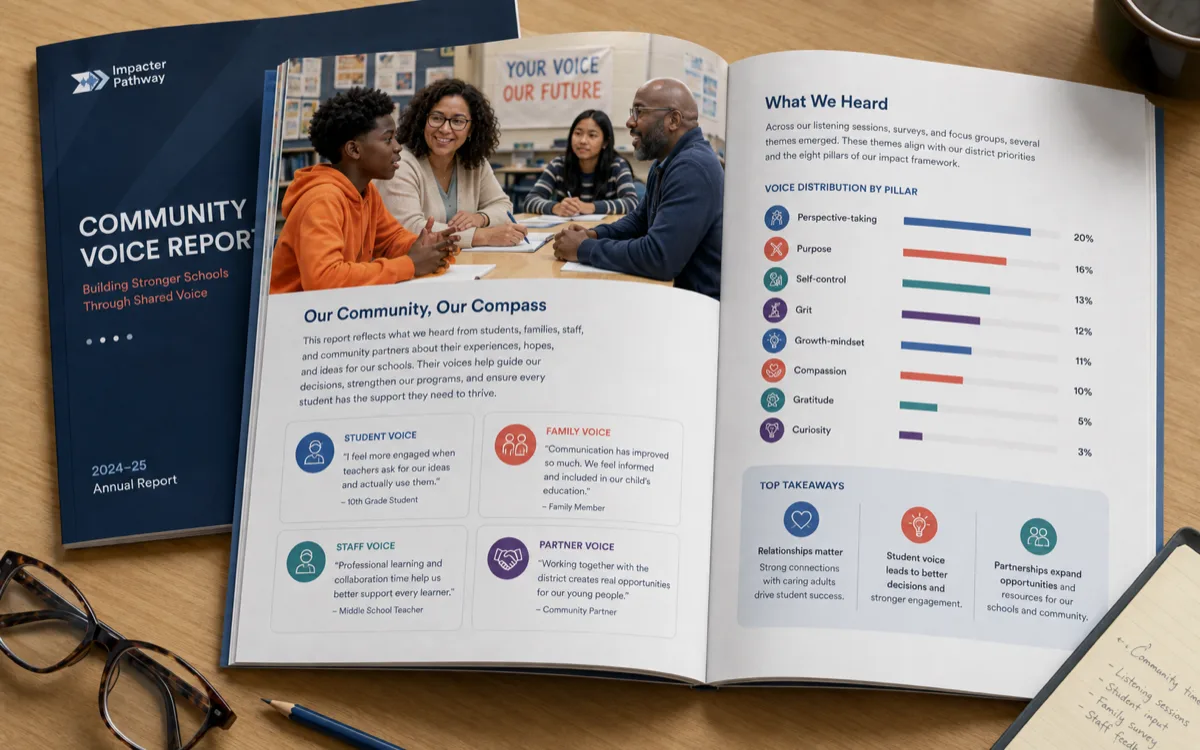
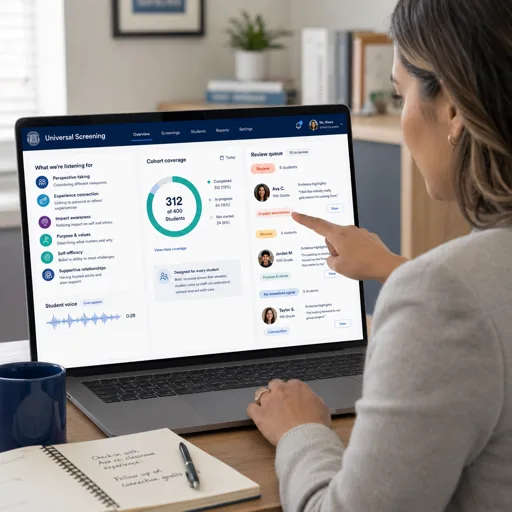
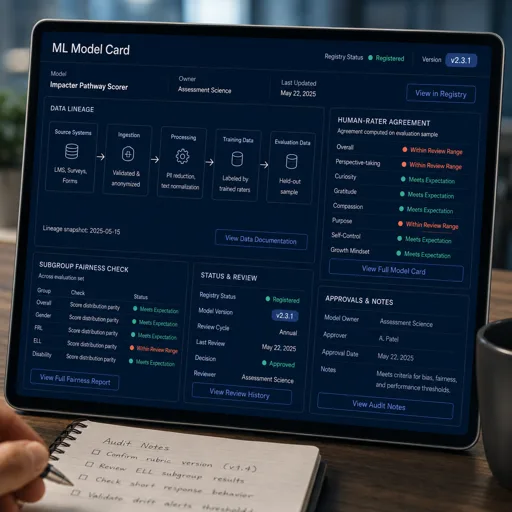
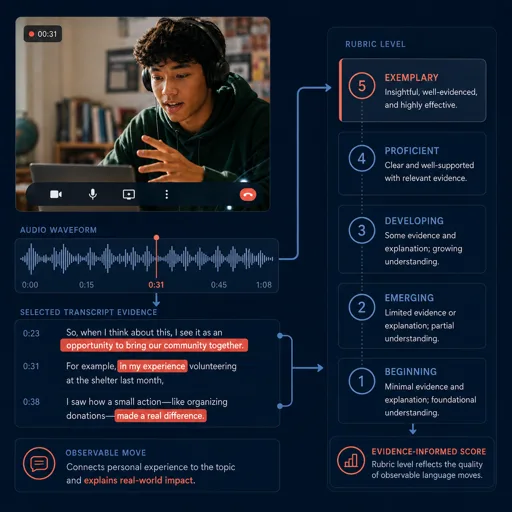
IMPACTER Pathway builds measurement infrastructure that scores authentic student voice against published rubrics. Under California's Behavioral Health Services Act, the Santa Clara County Office of Education leads a statewide evaluation initiative. IMPACTER builds the measurement layer, with Stanford, Applied Survey Research, and Breaking Barriers California validating the work, and a public dashboard as the deliverable.
What Should Public Accountability Look Like When the Measure Is Strength-Based?
Nearly every public education dashboard is deficit-framed. This one measures protective evidence in student voice: coping, connection, help-seeking, reflection, forward orientation, composited into a Wellness Index that routes to MTSS support tiers. That inversion changes what "good performance" means, what incentives a public dashboard creates, and who should govern the thresholds.
- Q1The logic model.What is the full theory of change from screening administration to tier assignment to support delivered to student outcome? Which links are tested, and which are assumed?
- Q2Asset-based accountability.When the measure is strength-based rather than deficit-based, what does "good performance" mean at the school level, and what does that do to incentives?
- Q3Threshold legitimacy.Who has standing to set tier boundaries: the measurement vendor, the county office, the state commission, districts, families? Design the governance protocol.
- Q4Unintended consequences.If a public dashboard rewards higher scores and the input is student voice, what are the failure modes (coaching, prompt-gaming, selective administration, opt-out patterns), and how does the evaluation design detect them?
"Strong fit if you want evaluation capacity built with your community rather than done to it."
EDU A011B course descriptionThat sentence is not a stretch here. It's the literal design constraint. The dashboard is public by mandate, the consortium spans five organizations, and the population being measured is students whose voices are the data. Student teams would map the logic model, shape evaluation questions with real stakeholders, and deliver an evaluation proposal with a live client waiting for it.
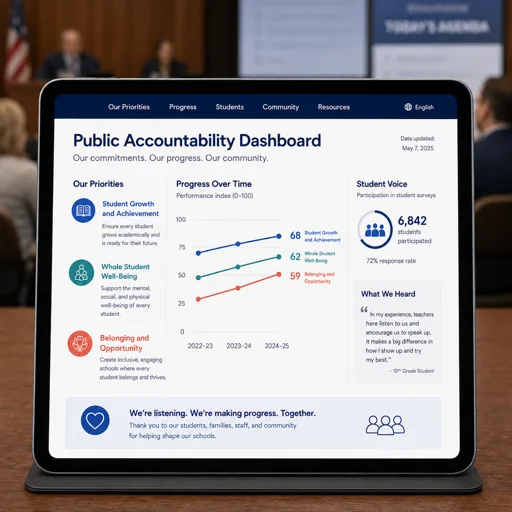

- A participatory evaluation proposal for the public dashboard: questions, methods, stakeholder roles
- An indicator framework: what gets reported publicly, at what level of aggregation, on what cadence
- A stakeholder engagement protocol for threshold-setting and ongoing governance
- A risk register of gaming and unintended-consequence failure modes, with detection strategies
Scoping Session
Full walkthrough of the initiative, the consortium structure, and the open governance questions, with the team leads who run this work daily.
Working Review
Live feedback on the emerging framework, plus access to partner-facing context as questions sharpen.
Client Presentation
Findings presented to IMPACTER's behavioral health leadership; strongest elements carried into the live evaluation design.